
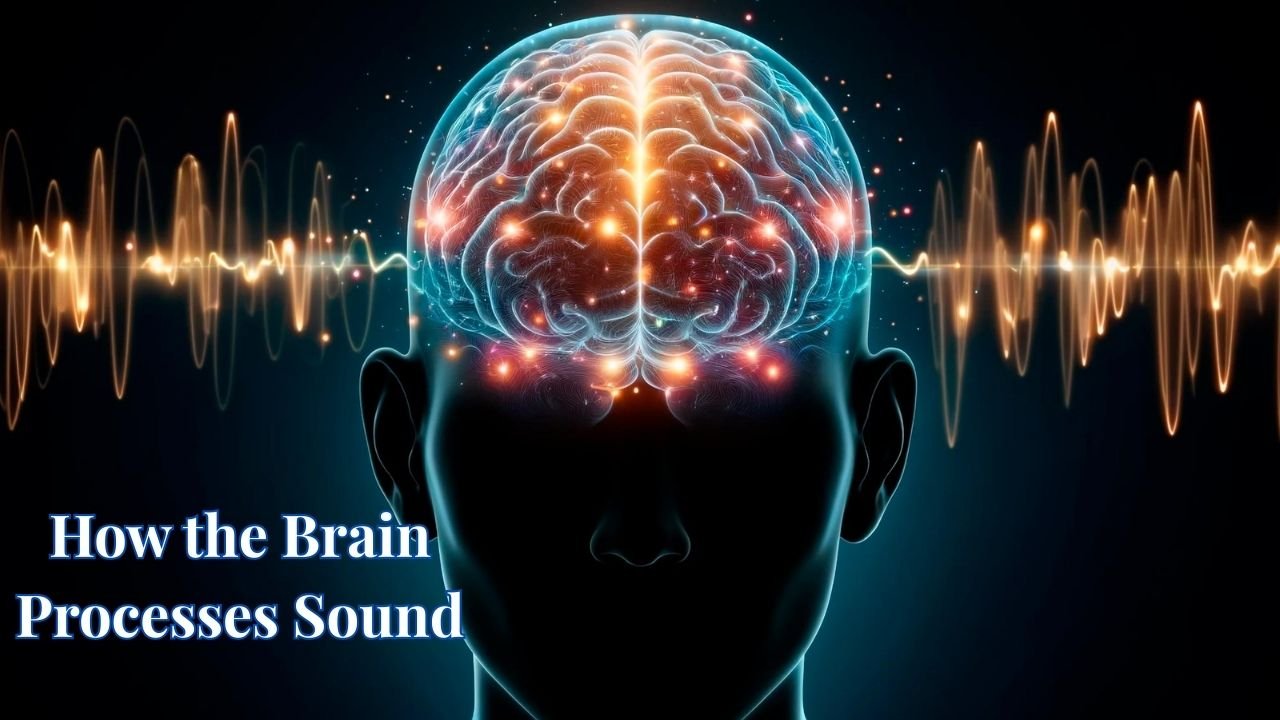
Sound is part of everyday life—from conversations and music to site visitors and nature. But have you ever ever wondered how the mind is aware those sounds? The procedure is extra complex than it appears. The mind works closely with the ears and apprehensive device to turn sound waves into meaningful statistics. This guide explains how the brain techniques sound in a simple and easy-to-understand way.
What Is Sound?
Sound starts as vibrations. When an object actions—together with vocal cords talking or a guitar string vibrating—it pushes against the air around it. These actions create sound waves that travel thru the air. The faster and stronger the vibrations, the louder or higher-pitched the sound we pay attention.
Step 1: Sound Waves Enter the Ear
Sound starts as vibrations within the air, called sound waves. These waves input the outer ear and journey through the ear canal till they reach the eardrum. When the sound waves hit the eardrum, it vibrates in reaction. Different sounds reason specific vibration patterns depending on their pitch and loudness.
Step 2: Vibrations Are Amplified
Behind the eardrum is the middle ear, which contains three tiny bones known as the ossicles—the hammer, anvil, and stirrup. These bones work together to extend the vibrations from the eardrum. This amplification is critical as it guarantees that even soft sounds can be detected actually by using the internal ear.
Step 3: Sound Is Converted into Electrical Signals
The vibrations then bypass into the inner ear, particularly the cochlea, a spiral-shaped, fluid-filled structure. Inside the cochlea are lots of tiny hair cells. As the fluid moves, the ones hair cells bend and convert the vibrations into electric signs. Each hair cell responds to particular sound frequencies, permitting the brain to differentiate amongst high-pitched and coffee-pitched sounds.
Step 4: Signals Travel to the Brain
Once sound is converted into electrical signals, they are carried by using the auditory nerve to the brain. These alerts first attain the brainstem, which handles simple sound processing responsibilities which include timing and direction. This allows you become aware of wherein a legitimate is coming from, such as left or right.
Step 5: The Brain Interprets Sound
The indicators then journey to the auditory cortex, positioned in the temporal lobe of the mind. This is wherein sound will become significant. The brain interprets speech, acknowledges song, and identifies familiar sounds. It also connects sounds with recollections and emotions, that’s why a song can make you sense glad or nostalgic.
Why This Process Is Important
Sound processing lets in human beings to communicate, learn, and live safe. The mind’s potential to quick and appropriately procedure sound enables with language improvement, social interplay, and environmental cognizance. Any disruption on this procedure—such as harm to the ear or auditory nerve—can have an effect on listening to and expertise.
Conclusion
The mind’s capability to manner sound is a amazing gadget that works seamlessly in the history of each day life. From taking pictures sound waves to interpreting complex speech and song, each step plays a critical position. Understanding this method now not handiest enables us admire how listening to works but additionally highlights the importance of protecting our ears and mind fitness. Sound is more than noise—it’s records, emotion, and connection, all made possible by way of the mind’s superb processing strength.
FAQ’s
How fast does the brain process sound?
The brain techniques sound extremely speedy—frequently inside milliseconds—allowing us to react nearly instantly.
Can the brain adapt to hearing loss?
Yes, the brain can adapt to a degree, especially with listening to aids or cochlear implants, but extreme harm may be everlasting.
How does the brain recognize speech?
The auditory cortex works with language facilities in the brain to decode speech sounds into phrases and that means.
