
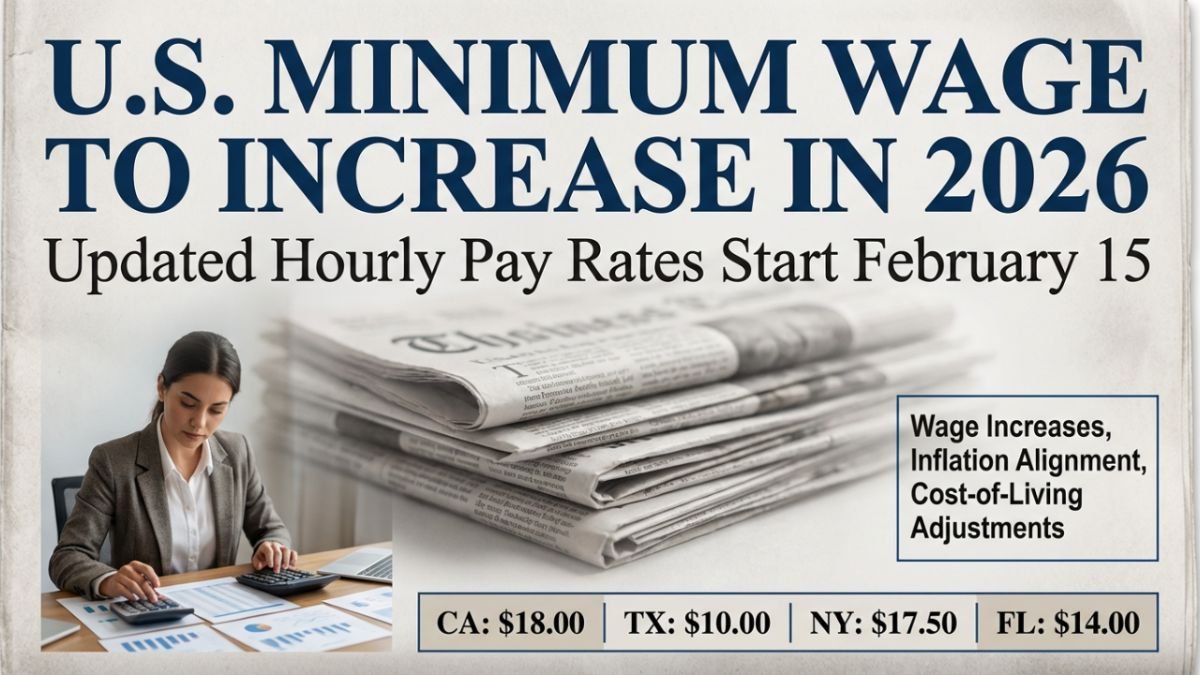
For the working class in America, 2026 is poised to be a historic turning point. After remaining unchanged for nearly sixteen years, the federal minimum wage is finally set to increase. This new wage rate will take effect on February 15, 2026, directly benefiting millions of low-income workers. Amidst rising inflation, high rents, and expensive food, transportation, and healthcare costs, this decision is seen as long-awaited relief for many families.
This change is not just about a date or a number; it represents the hope for improved lives for millions of people who have been struggling with limited incomes for years.
A New Direction for US Labor Wage Policy
The 2026 minimum wage increase is not considered a one-time measure but rather the beginning of a phased plan extending to 2030. Under this plan, wages will be gradually increased, allowing both employees and employers time to adjust.
This decision clearly signals that the US is becoming more serious about workers’ income and economic equality. Given the changing times and inflation levels, it has been acknowledged that the old wage standards are no longer adequate to meet today’s cost of living.
What to Expect Before February 2026
As February 2026 approaches, preparations for the new wage rates are underway in various US states. Some states have already been increasing wages annually in line with inflation, while others are making significant changes for the first time following the federal decision.
States like California, New York, and Washington already have minimum wages significantly higher than the federal level, especially in major cities. Meanwhile, many states that previously relied solely on the federal minimum wage are now revising their wage policies upward.
How Much Will Employees’ Earnings Increase?
If an employee works full-time and is currently earning the federal minimum wage, this increase will boost their monthly income by approximately $160. Over a year, this amounts to more than $2,000.
While this amount may not seem significant at first glance, for low-income families, it can be crucial for covering essential expenses such as groceries, utility bills, medications, or children’s needs. For those living paycheck to paycheck, this increase represents a significant step towards greater financial stability.
States Moving Ahead of the Federal Plan
Many US states have already moved ahead with increasing their minimum wage without waiting for the federal government. States like California and Washington have minimum wage rates exceeding $17 per hour, with some cities even reaching over $18 per hour.
States like Florida and Illinois are also implementing gradual increases each year, and in many places, the wage is directly tied to inflation to prevent future periods of stagnation.
Regional Disparities and Wage Gaps
A key aspect of the 2026 wage structure is the significant variation in wage levels across different parts of the United States. Employees working in large, expensive cities like New York City, San Francisco, and Seattle earn significantly more per hour than those in rural areas.
This regional approach acknowledges that the cost of living is not uniform across the country. While this results in wage disparities, it also allows for wages to be set according to local economic realities.
Long-Awaited Relief for Tipped Workers
Tipped workers in the restaurant, hotel, and service industries have long been among the most affected. For decades, their base wage remained just slightly above $2.
Starting in 2026, this base wage will increase to $5.50 per hour. Although employers can still include tips in total earnings, it will be their responsibility to ensure that an employee’s total income does not fall below the new minimum wage. This will provide greater income security for millions of service workers.
A better start for young people and first-time workers
This change will also benefit young employees under the age of 20. The youth training wage, which previously applied for the first 90 days of employment, is being increased, providing young workers with better pay from the start of their careers.
This will not only give them greater financial independence, but it also acknowledges that young people today face the same cost of living challenges as older workers.
The Impact of Wage Increases Extends Beyond Paychecks
According to economists, raising the minimum wage doesn’t just benefit employees; it has a ripple effect on the entire economy. When people have more money to spend, they tend to spend more at local businesses and on services.
This can also benefit small businesses. Additionally, better wages can make employees less likely to switch jobs, reducing employee turnover for companies and lowering training costs.
Critics’ Concerns Also Exist
While the decision has widespread support, some criticisms have also emerged. Small business owners fear that increased wages will raise their costs and potentially reduce their profits.
Some also believe that the wage increase could lead to higher prices for food and services. There are also concerns about a potential increase in automation and reliance on machines.
Supportive Measures for Small Businesses
In light of these concerns, several states have introduced programs for small businesses, including tax credits, grants, and transition support. These aim to help employers adapt to the new wage structure without resorting to layoffs.
The government hopes that the gradual implementation of the wage increase and the supportive programs will strike a balance.
Necessary Preparations for Employers
Before February 15, 2026, all employers must update their payroll systems, wage notices, and records. They must ensure that all employees—whether tipped or young—meet the new minimum wage requirements.
Failure to comply with the regulations could result in fines, penalties, or legal action, making timely preparation crucial.
A Turning Point After Years of Stagnation
The 2026 minimum wage increase is considered a turning point for low-wage workers. After years of stagnation, there is now hope for a better standard of living.
While challenges remain, this step signals a move towards an economy where hard work provides the opportunity for a stable and dignified life.
The Path Beyond 2026
This plan, extending to 2030, may encounter several challenges, particularly if inflation or economic conditions change. However, having a defined framework allows for periodic adjustments and reviews.
Currently, millions of American workers are anticipating an increase in their next paycheck, and this is the most significant achievement of this change.
Conclusion
The U.S. Minimum Wage Increase 2026—Updated Hourly Pay Rates Starting February 15 is not just a policy change but a symbol of renewed hope for America’s working class. In an era of rising inflation, this decision not only provides economic relief but also demonstrates an effort to bring wages closer to the actual cost of living after a long period of stagnation. With the right balance and oversight, this change has the potential to improve the lives of millions in the coming years.
Disclaimer
This article is for general informational purposes only. The information provided should not be considered legal, financial, or employment advice. Minimum wage regulations, rates, and timelines may vary at the state and local levels and are subject to change. For accurate information, consult the relevant government website or a qualified professional.
FAQs
Q. When will the U.S. minimum wage increase take effect in 2026?
A. The updated federal minimum wage will take effect on February 15, 2026.
Q. Who will benefit the most from the minimum wage increase?
A. Low-income workers, tipped employees, and entry-level workers will benefit the most from this change.
Q. How much more money will full-time workers earn after the increase?
A. Full-time minimum wage workers may earn around $160 more per month, adding up to over $2,000 annually.
Q. Are all U.S. states following the same minimum wage rate?
A. No, many states and cities have higher minimum wages based on local living costs.
Q. Will tipped workers also see a wage increase in 2026?
A. Yes, tipped workers’ base pay will rise, and employers must ensure total earnings meet the new minimum wage.
